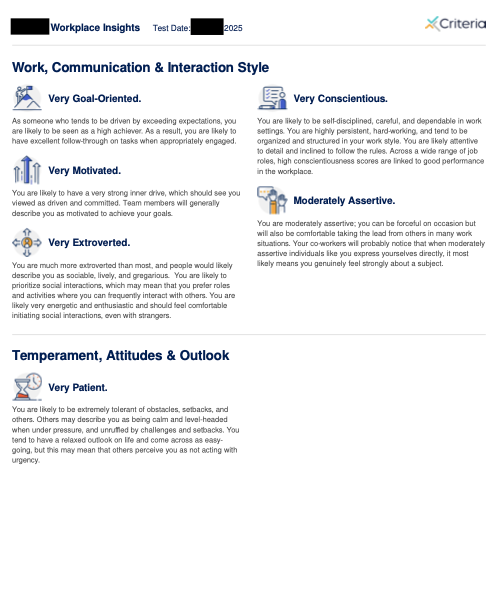
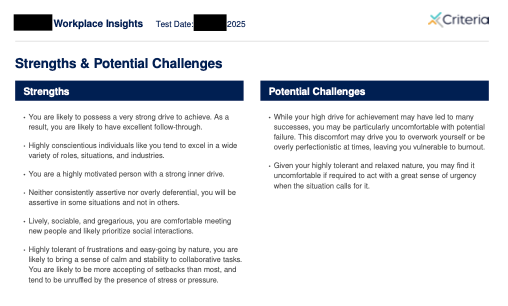
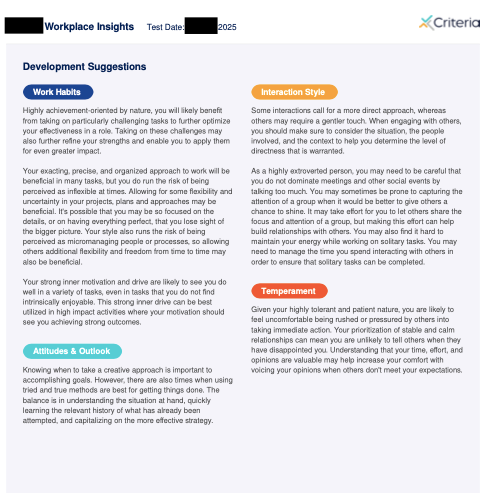
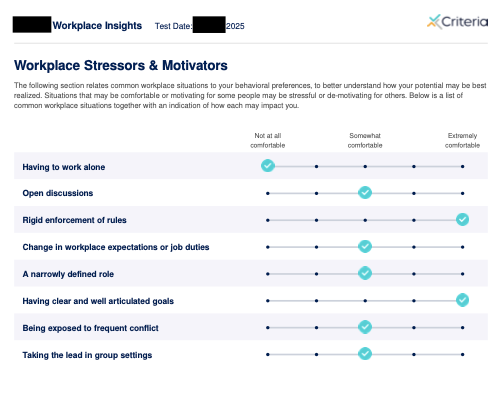
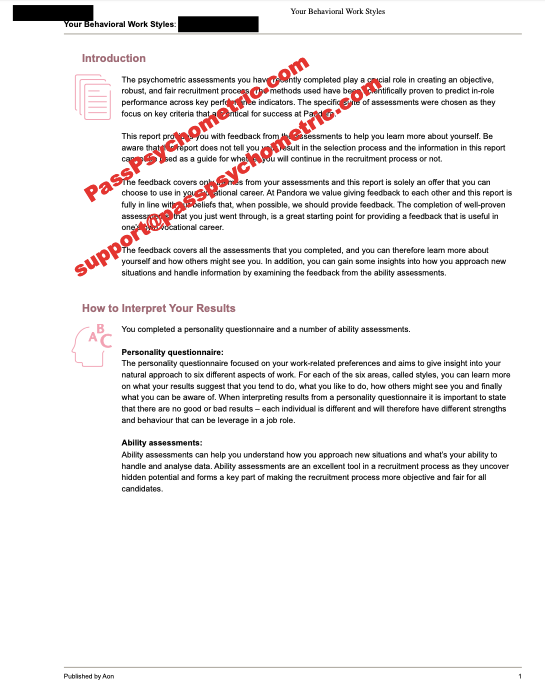
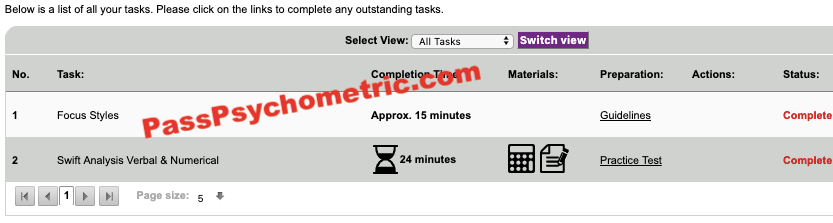
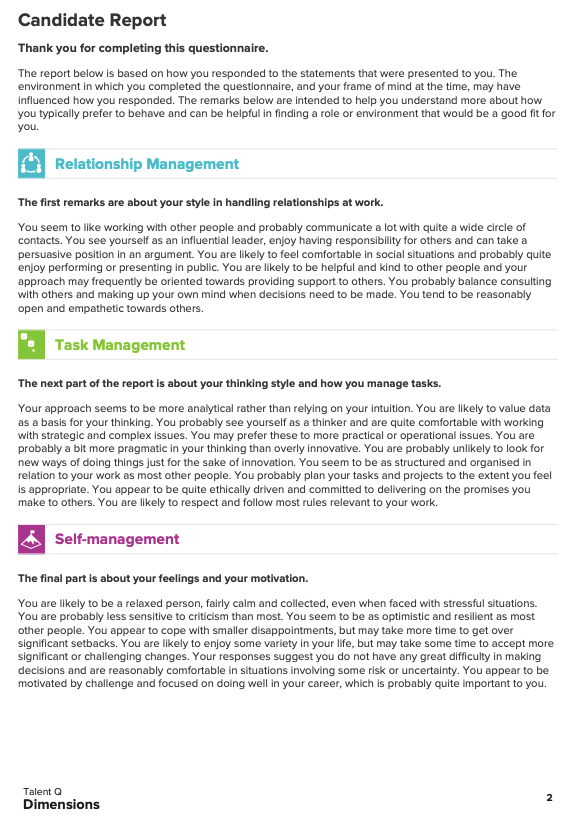
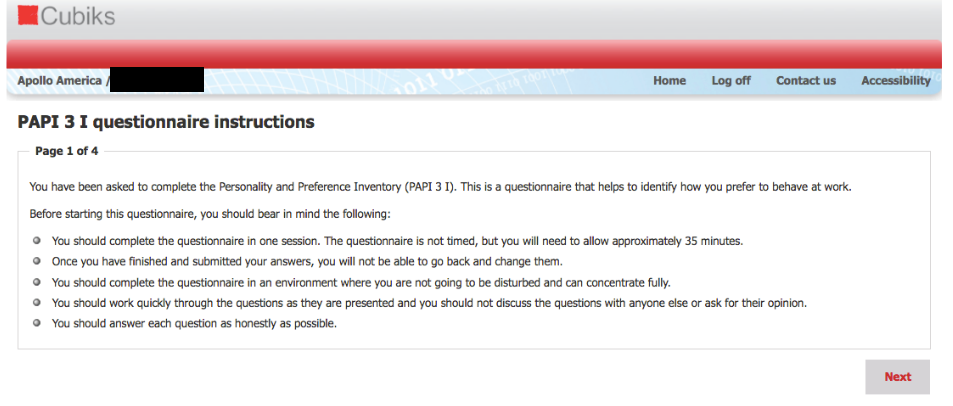
Most people do not fail Personality Tests because they lack the right traits; they fail because they do not prepare and research – they do not understand the format, the scoring, or the behavioral patterns the test is designed to detect. PassPsychometric’s Personality Tests Guide on this page, will break down each major assessment framework and gives you concrete strategies to perform at your best. The goal is not to fake who you are: it is to present yourself accurately under conditions designed to trip you up – PassPsychometric can be hired to align answers according to your background, the role, the employer and the underlying algorithmic scoring system.
Psychometric tests are standardized instruments designed to measure psychological attributes: cognitive ability, personality traits, behavioral tendencies, and motivational drivers. Employers don’t use them because they enjoy making candidates sweat. They use them because unstructured interviews are notoriously unreliable predictors of job performance, hovering around 14-18% predictive validity. Structured psychometric batteries push that number above 50%.
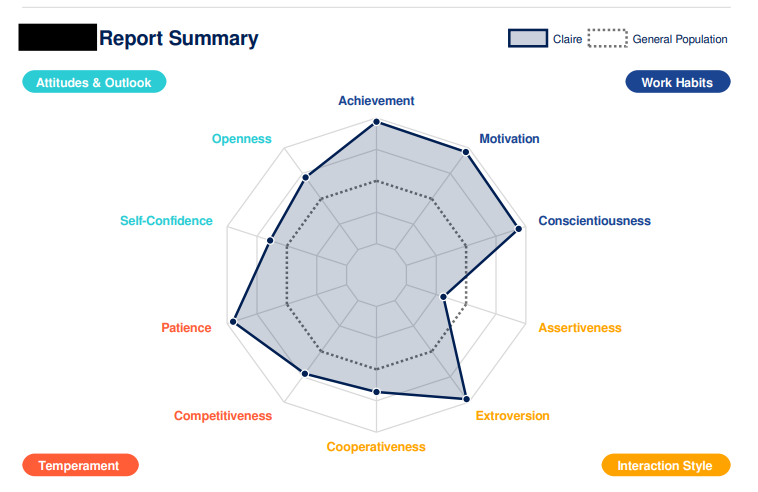
The key thing to understand is that these tests aren’t pass/fail in the way a math exam is. They generate a profile that’s compared against a benchmark for the specific role. A high score on “dominance” might be perfect for a sales director position but a red flag for a collaborative team role. Context matters enormously.
Ability tests have right and wrong answers. Numerical reasoning, verbal reasoning, inductive reasoning: these are timed, scored, and ranked. You either got the answer correct or you didn’t. Personality assessments work differently. They use forced-choice or Likert-scale formats to map your behavioral preferences across multiple dimensions.
The SHL OPQ32, for example, measures 32 specific personality characteristics. Saville Wave Professional Styles assesses 36 dimensions grouped into four clusters. These aren’t measuring intelligence; they’re measuring tendencies. There’s no objectively “right” answer, but there are answers that align better with specific job profiles. Understanding this distinction changes how you prepare.
Large employers rarely rely on a single test. A typical graduate scheme might combine SHL verbal and numerical reasoning with a Saville Wave personality profile. Investment banks often pair Hogan assessments with cognitive ability tests from a different provider. The logic is simple: different tests catch different things.
Cognitive tests filter for baseline intellectual capability. Personality assessments predict cultural fit and behavioral tendencies under pressure. By combining providers like SHL, Saville, Hogan, and SOVA, employers create a multi-layered picture that’s harder to game. Each provider uses different question structures, scoring algorithms, and normative databases, which means your preparation needs to be test-specific, not generic.
These two providers dominate the UK and European recruitment market. If you’re applying to any FTSE 250 company, a Big Four firm, or a major consultancy, you’ll almost certainly encounter one or both. They look similar on the surface but differ significantly in structure and scoring.
The Saville Wave Professional Styles questionnaire presents you with blocks of four statements. You rate each on a nine-point scale from “very strongly disagree” to “very strongly agree.” It sounds straightforward until you realize the test is specifically designed to detect inconsistency. It asks conceptually similar questions in different ways throughout the assessment, and your consistency score is reported to the employer.
The 36 dimensions are grouped into four clusters: Thought, Influence, Adaptability, and Delivery. Each cluster maps to workplace behaviors. For a leadership role, high scores in Influence and Delivery dimensions matter most. For an analyst position, Thought and Adaptability carry more weight.
Your best strategy is to research the specific role’s competency framework before taking the test. Most large employers publish these openly. Then, answer honestly but with awareness of which dimensions the role prioritizes. Don’t try to fake an entirely different personality: the consistency checks will catch you.
SHL’s ability tests are where raw preparation pays off most directly. The numerical reasoning test presents data in tables, charts, and graphs, then asks you to perform calculations under strict time pressure. You typically get 25 questions in 25 minutes, and the difficulty adapts based on your responses in some versions.
Practice with actual SHL-format questions, not generic math problems. The specific challenge isn’t the math itself (it’s rarely harder than GCSE level) but interpreting complex data presentations quickly. Get comfortable with percentage changes, ratios, and currency conversions.
For inductive reasoning, you’re identifying patterns in abstract shapes. The key insight most people miss: there are usually two rules operating simultaneously (rotation plus color change, for instance). Train yourself to look for compound patterns rather than single-variable sequences. Timed practice is essential here because speed matters as much as accuracy.
SOVA is newer to the market but growing rapidly, particularly among public sector and financial services employers. Their assessments blend situational judgment, personality measurement, and cognitive ability into a single adaptive platform. The test adjusts difficulty based on your responses, which means two candidates can face very different questions.
SOVA’s personality component uses a forced-choice format where you rank statements by how much they describe you. Unlike Likert-scale tests where you can rate everything highly, forced-choice formats require genuine trade-offs. You have to decide whether you’re “more” collaborative or “more” independent, and there’s no neutral middle ground.
Preparation for SOVA assessments means practicing with adaptive-format tests specifically. The pacing is different from fixed-format tests, and candidates who aren’t used to the format often waste time on early questions that aren’t worth as many points as later, harder ones.
Regardless of which specific test you’re facing, certain preparation principles apply across every provider and format. These are the habits that separate candidates who perform at their ceiling from those who underperform.
Every timed cognitive test forces a speed-accuracy trade-off. Answering 20 out of 25 questions with 95% accuracy almost always produces a better score than answering all 25 with 70% accuracy. Most scoring algorithms penalize wrong answers less than they reward correct ones, but leaving questions blank is usually worse than guessing.
A practical approach: on your first pass, answer every question you can solve within 45 seconds. Flag anything that requires more thought and return to it. If you have 30 seconds left and three unanswered questions, make educated guesses rather than leaving blanks. Time yourself rigorously during practice sessions. If you’re consistently running out of time, the problem is almost always data interpretation speed, not calculation ability.
Personality assessments embed validity scales that detect contradictory responses. If you strongly agree that you “prefer working alone” in question 12 but strongly agree that you “thrive in team environments” in question 47, the system flags this. Too many inconsistencies and your results may be invalidated entirely.
The solution isn’t memorizing your previous answers. It’s having a clear, honest understanding of your own behavioral tendencies before you start. Spend 30 minutes before the test reflecting on how you genuinely operate at work. Are you detail-oriented or big-picture? Do you prefer structure or flexibility? Once you’ve anchored your self-concept, your answers will naturally be consistent because they’re truthful.
Most candidates treat psychometric tests as one-off hurdles, but the smartest approach is iterative. If you don’t get the role, request feedback on your assessment results. Many employers will share your profile, and this information is gold for future applications.
Look for patterns across multiple attempts. If you consistently score low on numerical reasoning, that’s a skill gap worth addressing with targeted practice. If your personality profile keeps flagging low resilience, consider whether that’s genuinely accurate or whether test anxiety is distorting your responses. Resources like PassPsychometric offer test-specific practice materials that mirror the actual format and difficulty of each provider’s assessments.
The candidates who perform best aren’t those trying to game the system. They’re the ones who understand exactly what each test measures, practice with realistic materials, and present an authentic but well-prepared version of themselves. That’s not cheating: it’s the same kind of preparation you’d do for any important professional milestone. Know the format, know yourself, and walk in ready.