Personality Tests

Short on time? Let Our Personality Test Experts take your test for you — across SHL, Saville, Hogan, AON, Korn Ferry and more.
We are so confident in Our Services, that we offer a full refund immediately if you do not pass your Personality Test!

We support ALL test providers, including:

Kenexa Psychometric Tests
Cubiks Psychometric Tests
Personality Test: 100% Guaranteed Success with Experts
Saville Psychometric Tests
Cut e Psychometric Tests
PwC Assessment Help: #1 Guaranteed Pass Online 2026

Personality Tests – an overview

Every year, thousands of candidates need to sit Personality Psychometric Tests — primarily as part of job applications. If you are looking for “how to cheat personality tests”, you have found the perfect solution!
Whether you need to pass the Saville Wave Personality Test, the SHL OPQ32 Occupational Personality Questionnaire, or the Hogan HPI — we have you covered.

How do we pass Personality Psychometric Tests with a 100% money-back pass guarantee?

PassPsychometric have an extensive wealth of experience in passing all forms of psychometric tests – including passing Personality Tests. Our team guarantee a 100% money-back pass guarantee due to the specialist Personality Test-taking team who will align answers according to:

The Role

We understand the key traits, skillsets and duties that need to be demonstrated on the Personality Test to pass the test.

The Employer

Each employer has a different set of core values, history, culture and work-ethic; all of which, we will align.

Your Background

we align the answers as closely and accurately as possible to your background, strengths and weakness; but always considering the end result to be a pass!

The underlying test provider algorithm scoring system

Each test provider has a totally different scoring mechanism. PassPsychometric are aware of the weightings and scoring frameworks in the algorithm – we will fine-tune the score to ensure passing personality tests is guaranteed!

Performance on other psychometric tests

It may not be obvious, but the results on the Personality Tests must be synchronised and consistent with performance on other tests. At PassPsychometric, our specialist teams work alongside one another to ensure a well-synchronised personality is achieved.

Examples of common Personality Tests Providers and how to pass Personality Tests

SHL OPQ (SHL Occupational Personality Questionnaire)
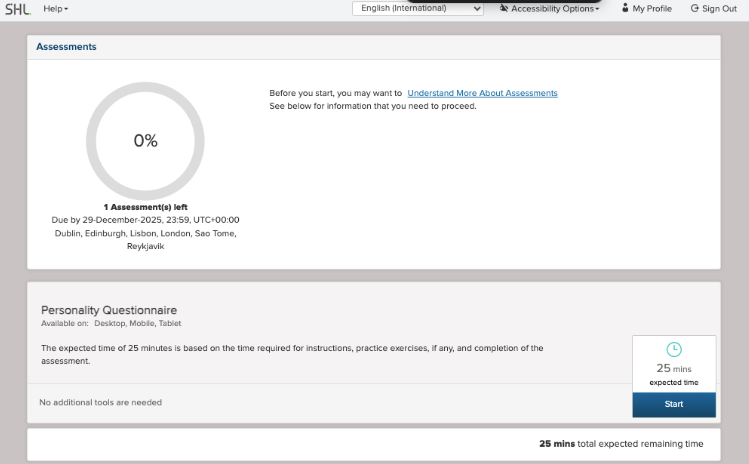
One of the world’s most popular Personality Tests are those by SHL – specifically, the SHL OPQ (SHL Occupational Personality Questionnaire). This test typically has 104 questions which are spread across 52 pages and 25 minutes are allocated. PassPsychometric have a specialist SHL OPQ test-taking team who you can hire and cheat the SHL OPQ with today with a 100% money-back pass guarantee!

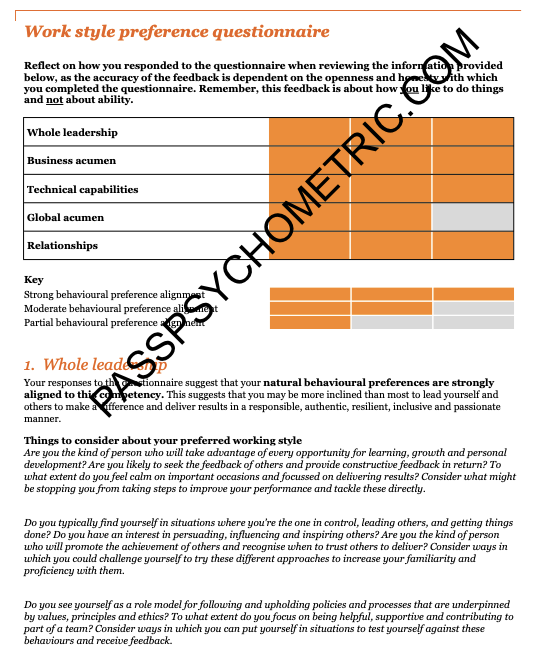
SHL Work Style Questionnaire Test

SHL also produces a different type of Personality Test called the SHL Work Style Questionnaire Test. This is used by mainly large employers, of which PwC is a popular one. This test will take around 45 minutes to complete over 100+ statements which will measure your preferred working style and behaviours, such as how you:

make decisions

work with others

handle pressure or deadlines

approach tasks (structured vs flexible)

communicate and collaborate

PwC uses it to see how well your style aligns with their internal behaviours framework (the PwC Professional model). At PassPsychometric, we have studied the full PwC Professional model, the SHL algorithm scoring system and we know precisely what answers to select to ensure you are selected ahead of the competition.

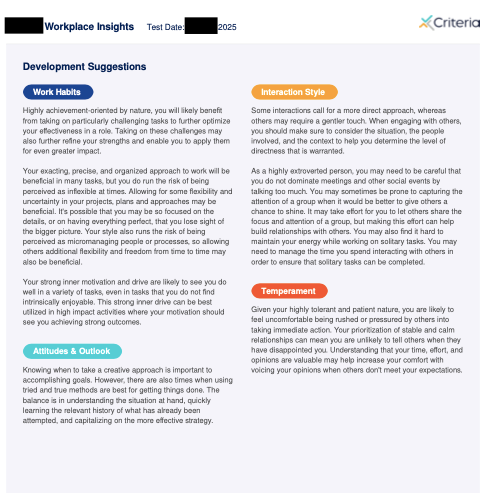
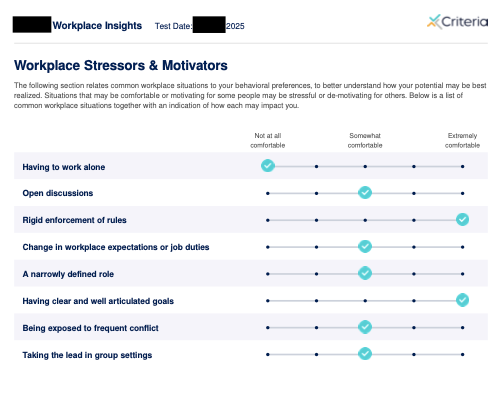
Criteria Corp Workplace Insights Test

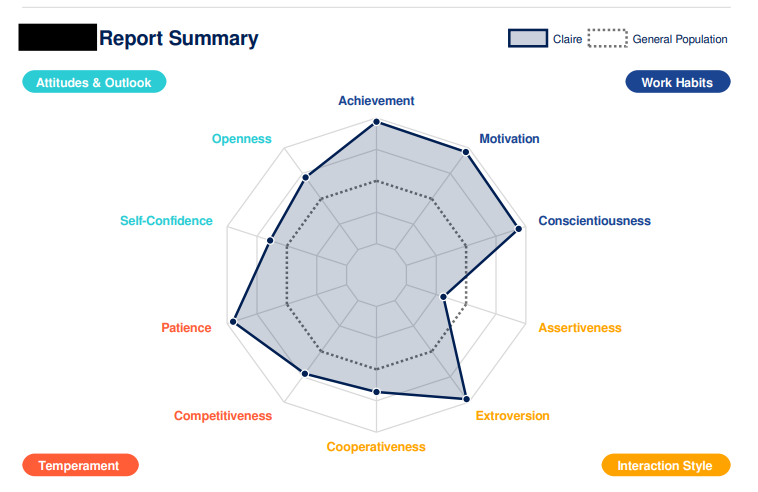
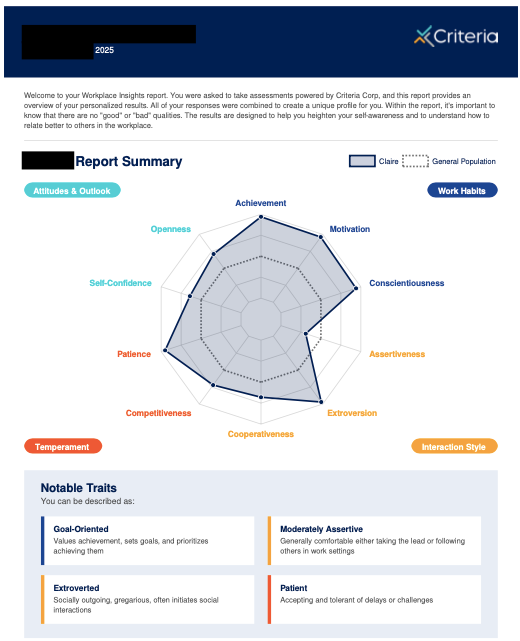
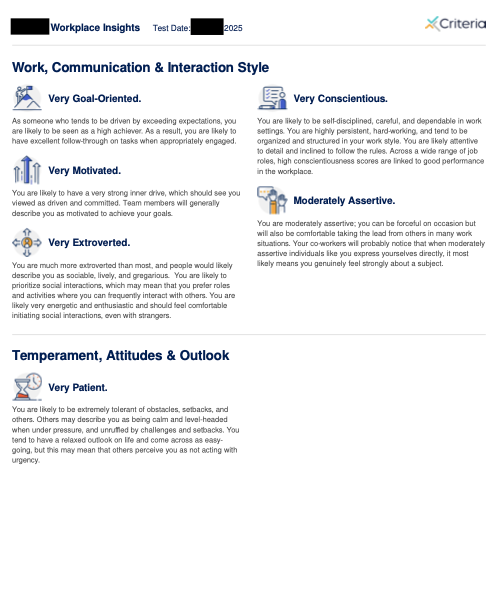
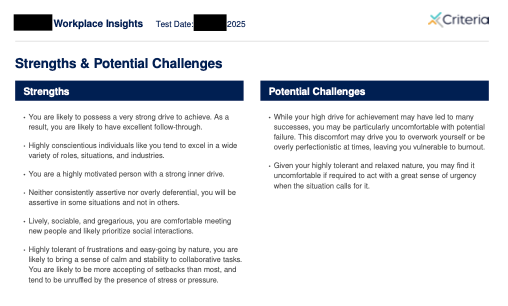
The Criteria Corp have multiple tests, of which the CCAT is the most popular, followed by the Workplace Insights Test. PassPsychometric can be hired to clear the Workplace Insights Personality Test and we can hit close to full marks on the star scoring diagram across all traits:

Achievement

Motivation

Conscientiousness

Assertiveness

Extroversion

Cooperativeness

Competitiveness

Patience

Self-Confidence

Openness

You can hire test-takers to pass the Workplace Insights Test today with PassPsychometric – we give a 100% money-back pass guarantee.

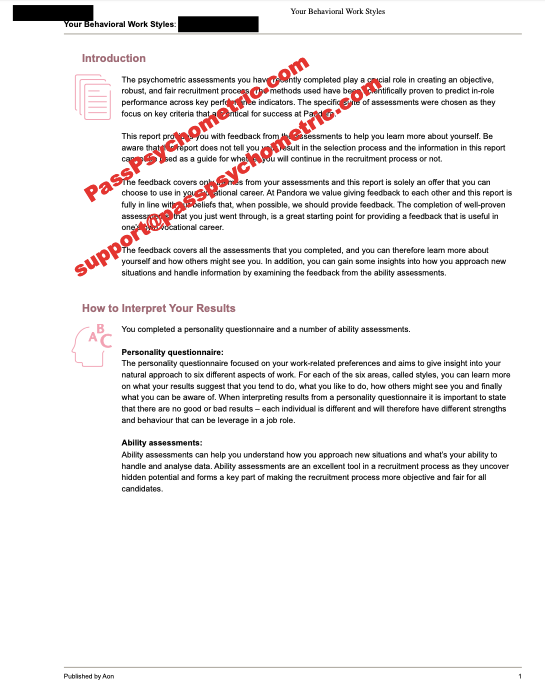
AON Behavioural Work Styles Assessment

The AON Behavioural Work Styles Assessment is hosted by AON (part of cut-e and maptq) – PassPsychometric can be hired to pass the AON Behavioural Work Styles test – we understand how busy life can get, and you may not have time to prepare.
The AON Behavioural Work Styles Personality Assessment is used by employers to understand how candidates behave in workplace situations. Through scenario-based or agreement-style questions, it measures traits such as:

Motivation

Teamwork

Communication

Problem-solving

Reliability

Disclaimer: whilst employers may state, there is no pass or fail score – this is WRONG! Your results are compared to the ideal profile for a specific role and employers do reject candidates who fail the Personality Test – it is a TEST for a reason! The AON algorithm will focus on how well a candidate’s behaviour aligns with the job and company culture, as well as the consistency of their responses – PassPsychometric will account for everything and ensure you progress onto the next stage.

Arctic Shores Assessment

The Arctic Shores Assessment by Arctic Shores is a relatively modern, game-based psychometric test that measures how you naturally think and behave at work. Instead of traditional questions, it uses interactive tasks (like short games) to observe your behaviour in real time – such as how you solve problems, make decisions, stay focused, or react under pressure. Unlike other test providers, the assessment uses neuroscience and collects thousands of data points from your actions to create a detailed profile of your strengths and working style. This can be very daunting, which is why you can cheat on the Arctic Shores Tests and hire the team at PassPsychometric to clear it for you. PassPsychometric give a 100% money-back pass guarantee to pass the Arctic Shores Tests within 24 hours!
Some employers we have passed the Arctic Shores test includes:

Airbus

PwC

Siemens

Ministry of Justice

Amazon

TalkTalk

Vitality

Molson Coors

Capita

Kantar

CBRE

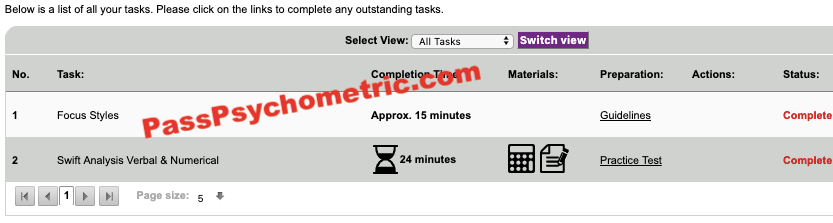
Saville Focus Styles

The Saville Wave Focus Styles is one of the most popular Personality Tests. The Focus Styles personality assessment is used by Saville Assessment which is a 13-minute behavioral questionnaire that measures your:

Motives (what drives you)

Talents (what you’re naturally good at)

Preferences (how you like to work)

Culture fit (where you’re likely to succeed)

You will be given blocks of 6 statements where you rate each statement on a 1–9 scale (strongly disagree → strongly agree). Saville algorithm will determine how you trade-off different traits – they intend to trick candidates in selecting the most obvious answer. For this reason, many candidates cheat on Saville Focus Styles tests and hire PassPsychometric. PassPsychometric gives a 100% money-back pass guarantee and we will ensure the answers pass all consistency checks to detect fake or overly ideal answers and we combine personality + motivation + job fit in our answers. We also can pass the Saville Swift Analysis Tests – we have you covered for all test types and test providers!

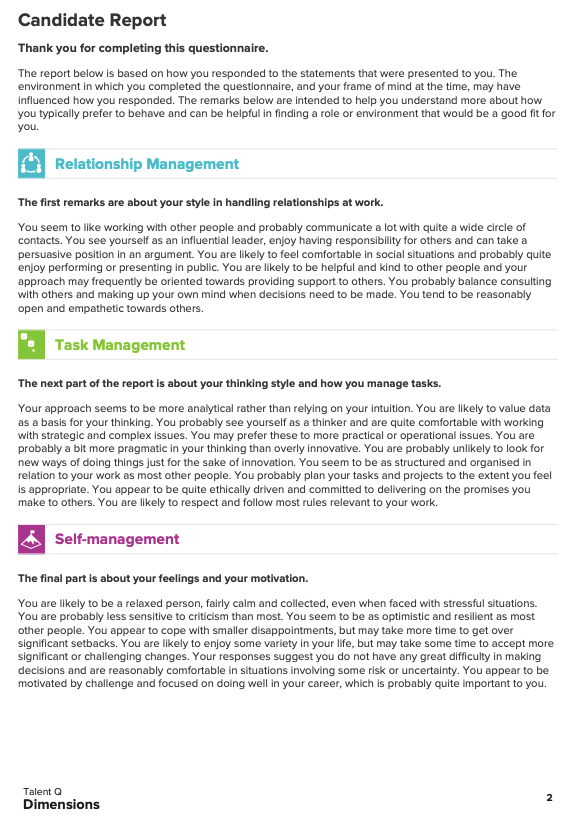
Korn Ferry Dimensions Personality Test

The Korn Ferry Dimensions Personality Test is a workplace personality assessment used by employers (including consulting, finance, and large corporate firms) to evaluate how you are likely to behave in a job setting.
You can hire PassPsychometric Experts to pass the Korn Ferry Dimensions Personality Test with a 100% money-back pass guarantee! Our team will align the answers to all the traits assesses:

Drive & ambition (how motivated and goal-focused you are)

Interpersonal style (how you work with others)

Decision-making style (analytical vs intuitive)

Structure preference (organised vs flexible)

Emotional resilience (how you handle stress or setbacks)

Risk approach (cautious vs bold decisions)

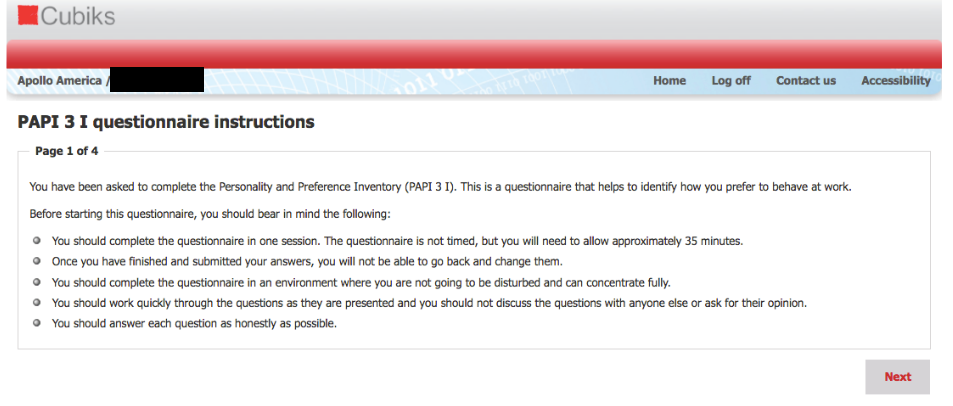
PAPI 3 (Personality and Preference Inventory) Personality Test

The PAPI 3 (Personality and Preference Inventory) is one of the more established workplace personality assessments used in recruitment and development. It is designed to map how you typically behave at work and how you respond to different job situations.
The team at PassPsychometric will create a framework that aligns to the PAPI 3 scoring evaluation categories:

Dominance (lead vs follow)

Extraversion (social vs reserved)

Conscientiousness (structured vs flexible)

Emotional stability (calm vs reactive under pressure)

Need for achievement (goal-driven vs steady pace)

Work pace (fast vs methodical)

Rule-following (structured vs improvisational)

You can cheat on the PAPI 3 and hire PassPsychometric – we will select answers aligned to the roles and traits required to Pass the test such as:

how structured or flexible you are

whether you take charge or prefer following

how sociable or independent you are

how detail-focused vs big-picture you tend to be

Hogan Personality Inventory (HPI) Personality Test

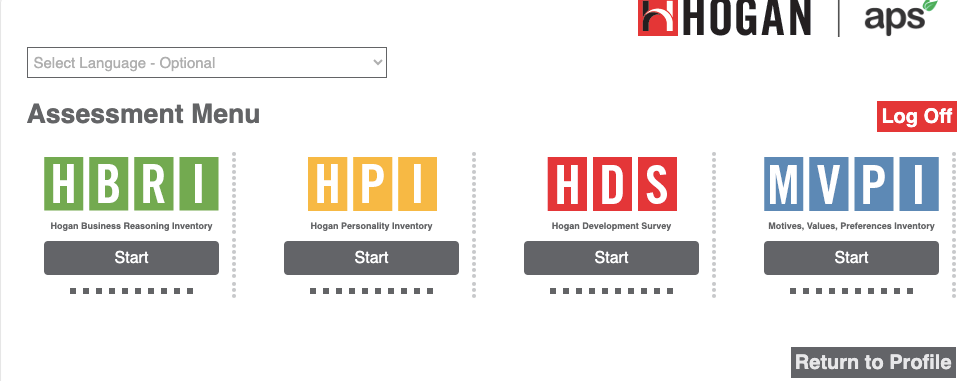
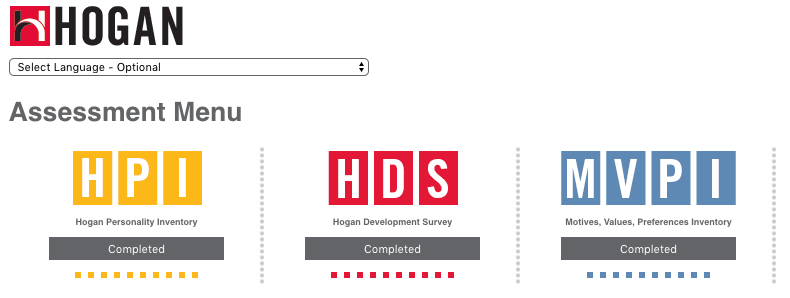
The Hogan HPI suite is unique because it includes three separate instruments:

HPI Hogan

HDS Hogan

MPVI Hohan

The HPI measures normal personality across seven scales (Adjustment, Ambition, Sociability, Interpersonal Sensitivity, Prudence, Inquisitive, and Learning Approach). The HDS, or Hogan Development Survey, measures “derailers”: personality characteristics that emerge under stress and can undermine performance. The MVPI measures values and motivational drivers.
The “dark side” assessment is what makes Hogan distinctive. It identifies eleven potential derailers, from “Excitable” (volatile under pressure) to “Dutiful” (reluctant to act independently). Employers use this specifically to predict how you’ll behave when things go wrong, not just when everything is running smoothly.
The best approach to Hogan assessments is genuine self-awareness. Before the test, honestly reflect on how you behave under stress. Do you withdraw? Become controlling? Avoid conflict? The HDS will probe these tendencies, and extreme responses in either direction raise flags. Moderate, self-aware responses tend to produce the most favorable profiles. All of these questions will be answered by elite test taking experts at PassPsychometric – avail the 100% money-back pass guarantee offer today!

Other Personality Tests PassPsychometric can Pass

PassPsychometric sit all forms of Personality Tests, including those less common such as:

Factors+

SOVA Personality Test

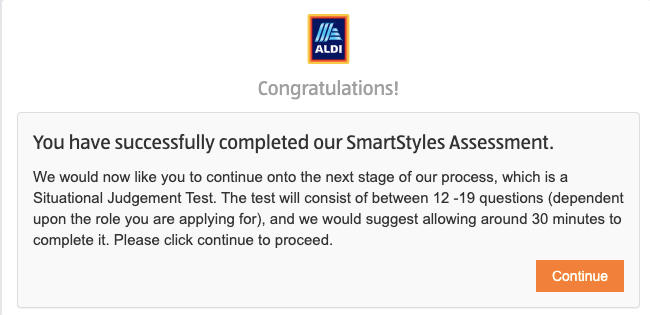
Aldi SmartStyles Assessment

Centrica Utopia Personality Test

Extra Information

How to Pass Personality Tests

PassPsychometric have an extensive wealth of experience in passing all forms of psychometric tests – including passing Personality Tests. Our team guarantee a 100% money-back pass guarantee due to the specialist Personality Test-taking team who will align answers according to:

Why do people fail the Personality Psychometric Tests?

Most people do not fail Personality Tests because they lack the right traits; they fail because they do not prepare and research – they do not understand the format, the scoring, or the behavioral patterns the test is designed to detect. PassPsychometric’s Personality Tests Guide on this page, will break down each major assessment framework and gives you concrete strategies to perform at your best. The goal is not to fake who you are: it is to present yourself accurately under conditions designed to trip you up – PassPsychometric can be hired to align answers according to your background, the role, the employer and the underlying algorithmic scoring system.

Understanding Psychometric Assessment Frameworks

Psychometric tests are standardized instruments designed to measure psychological attributes: cognitive ability, personality traits, behavioral tendencies, and motivational drivers. Employers don’t use them because they enjoy making candidates sweat. They use them because unstructured interviews are notoriously unreliable predictors of job performance, hovering around 14-18% predictive validity. Structured psychometric batteries push that number above 50%.
The key thing to understand is that these tests aren’t pass/fail in the way a math exam is. They generate a profile that’s compared against a benchmark for the specific role. A high score on “dominance” might be perfect for a sales director position but a red flag for a collaborative team role. Context matters enormously.

The Difference Between Ability and Personality Tests

Ability tests have right and wrong answers. Numerical reasoning, verbal reasoning, inductive reasoning: these are timed, scored, and ranked. You either got the answer correct or you didn’t. Personality assessments work differently. They use forced-choice or Likert-scale formats to map your behavioral preferences across multiple dimensions.
The SHL OPQ32, for example, measures 32 specific personality characteristics. Saville Wave Professional Styles assesses 36 dimensions grouped into four clusters. These aren’t measuring intelligence; they’re measuring tendencies. There’s no objectively “right” answer, but there are answers that align better with specific job profiles. Understanding this distinction changes how you prepare.

Why Employers Use Multi-Provider Batteries

Large employers rarely rely on a single test. A typical graduate scheme might combine SHL verbal and numerical reasoning with a Saville Wave personality profile. Investment banks often pair Hogan assessments with cognitive ability tests from a different provider. The logic is simple: different tests catch different things.
Cognitive tests filter for baseline intellectual capability. Personality assessments predict cultural fit and behavioral tendencies under pressure. By combining providers like SHL, Saville, Hogan, and SOVA, employers create a multi-layered picture that’s harder to game. Each provider uses different question structures, scoring algorithms, and normative databases, which means your preparation needs to be test-specific, not generic.

Mastering the Saville Wave and SHL Assessments

These two providers dominate the UK and European recruitment market. If you’re applying to any FTSE 250 company, a Big Four firm, or a major consultancy, you’ll almost certainly encounter one or both. They look similar on the surface but differ significantly in structure and scoring.

Navigating Saville Wave Professional Styles

The Saville Wave Professional Styles questionnaire presents you with blocks of four statements. You rate each on a nine-point scale from “very strongly disagree” to “very strongly agree.” It sounds straightforward until you realize the test is specifically designed to detect inconsistency. It asks conceptually similar questions in different ways throughout the assessment, and your consistency score is reported to the employer.
The 36 dimensions are grouped into four clusters: Thought, Influence, Adaptability, and Delivery. Each cluster maps to workplace behaviors. For a leadership role, high scores in Influence and Delivery dimensions matter most. For an analyst position, Thought and Adaptability carry more weight.
Your best strategy is to research the specific role’s competency framework before taking the test. Most large employers publish these openly. Then, answer honestly but with awareness of which dimensions the role prioritizes. Don’t try to fake an entirely different personality: the consistency checks will catch you.

Strategies for SHL Numerical and Inductive Reasoning

SHL’s ability tests are where raw preparation pays off most directly. The numerical reasoning test presents data in tables, charts, and graphs, then asks you to perform calculations under strict time pressure. You typically get 25 questions in 25 minutes, and the difficulty adapts based on your responses in some versions.
Practice with actual SHL-format questions, not generic math problems. The specific challenge isn’t the math itself (it’s rarely harder than GCSE level) but interpreting complex data presentations quickly. Get comfortable with percentage changes, ratios, and currency conversions.
For inductive reasoning, you’re identifying patterns in abstract shapes. The key insight most people miss: there are usually two rules operating simultaneously (rotation plus color change, for instance). Train yourself to look for compound patterns rather than single-variable sequences. Timed practice is essential here because speed matters as much as accuracy.

Approaching SOVA's Blended Adaptive Assessments

SOVA is newer to the market but growing rapidly, particularly among public sector and financial services employers. Their assessments blend situational judgment, personality measurement, and cognitive ability into a single adaptive platform. The test adjusts difficulty based on your responses, which means two candidates can face very different questions.
SOVA’s personality component uses a forced-choice format where you rank statements by how much they describe you. Unlike Likert-scale tests where you can rate everything highly, forced-choice formats require genuine trade-offs. You have to decide whether you’re “more” collaborative or “more” independent, and there’s no neutral middle ground.
Preparation for SOVA assessments means practicing with adaptive-format tests specifically. The pacing is different from fixed-format tests, and candidates who aren’t used to the format often waste time on early questions that aren’t worth as many points as later, harder ones.

Universal Preparation and Performance Tactics

Regardless of which specific test you’re facing, certain preparation principles apply across every provider and format. These are the habits that separate candidates who perform at their ceiling from those who underperform.

Managing Time Constraints and Accuracy Trade-offs

Every timed cognitive test forces a speed-accuracy trade-off. Answering 20 out of 25 questions with 95% accuracy almost always produces a better score than answering all 25 with 70% accuracy. Most scoring algorithms penalize wrong answers less than they reward correct ones, but leaving questions blank is usually worse than guessing.
A practical approach: on your first pass, answer every question you can solve within 45 seconds. Flag anything that requires more thought and return to it. If you have 30 seconds left and three unanswered questions, make educated guesses rather than leaving blanks. Time yourself rigorously during practice sessions. If you’re consistently running out of time, the problem is almost always data interpretation speed, not calculation ability.

The Importance of Consistent Behavioral Profiling

Personality assessments embed validity scales that detect contradictory responses. If you strongly agree that you “prefer working alone” in question 12 but strongly agree that you “thrive in team environments” in question 47, the system flags this. Too many inconsistencies and your results may be invalidated entirely.
The solution isn’t memorizing your previous answers. It’s having a clear, honest understanding of your own behavioral tendencies before you start. Spend 30 minutes before the test reflecting on how you genuinely operate at work. Are you detail-oriented or big-picture? Do you prefer structure or flexibility? Once you’ve anchored your self-concept, your answers will naturally be consistent because they’re truthful.

Analyzing Results and Continuous Improvement

Most candidates treat psychometric tests as one-off hurdles, but the smartest approach is iterative. If you don’t get the role, request feedback on your assessment results. Many employers will share your profile, and this information is gold for future applications.
Look for patterns across multiple attempts. If you consistently score low on numerical reasoning, that’s a skill gap worth addressing with targeted practice. If your personality profile keeps flagging low resilience, consider whether that’s genuinely accurate or whether test anxiety is distorting your responses. Resources like PassPsychometric offer test-specific practice materials that mirror the actual format and difficulty of each provider’s assessments.
The candidates who perform best aren’t those trying to game the system. They’re the ones who understand exactly what each test measures, practice with realistic materials, and present an authentic but well-prepared version of themselves. That’s not cheating: it’s the same kind of preparation you’d do for any important professional milestone. Know the format, know yourself, and walk in ready.